
Single-column or double-column ground-mounted support systems: Which is more suitable for your photovoltaic power station?

Author
PROFENCE.ENERGY was established in 2014 with a focus on the design and manufacturing of solar mounting systems and related products
In photovoltaic power station support system selection, single-column and double-column are the two most common ground-fixed support structures. They differ significantly in the number of piles, terrain adaptability, and construction efficiency. The selection must be based on a comprehensive assessment of project conditions.
Single-column support systems: Fewer piles, stronger terrain adaptability
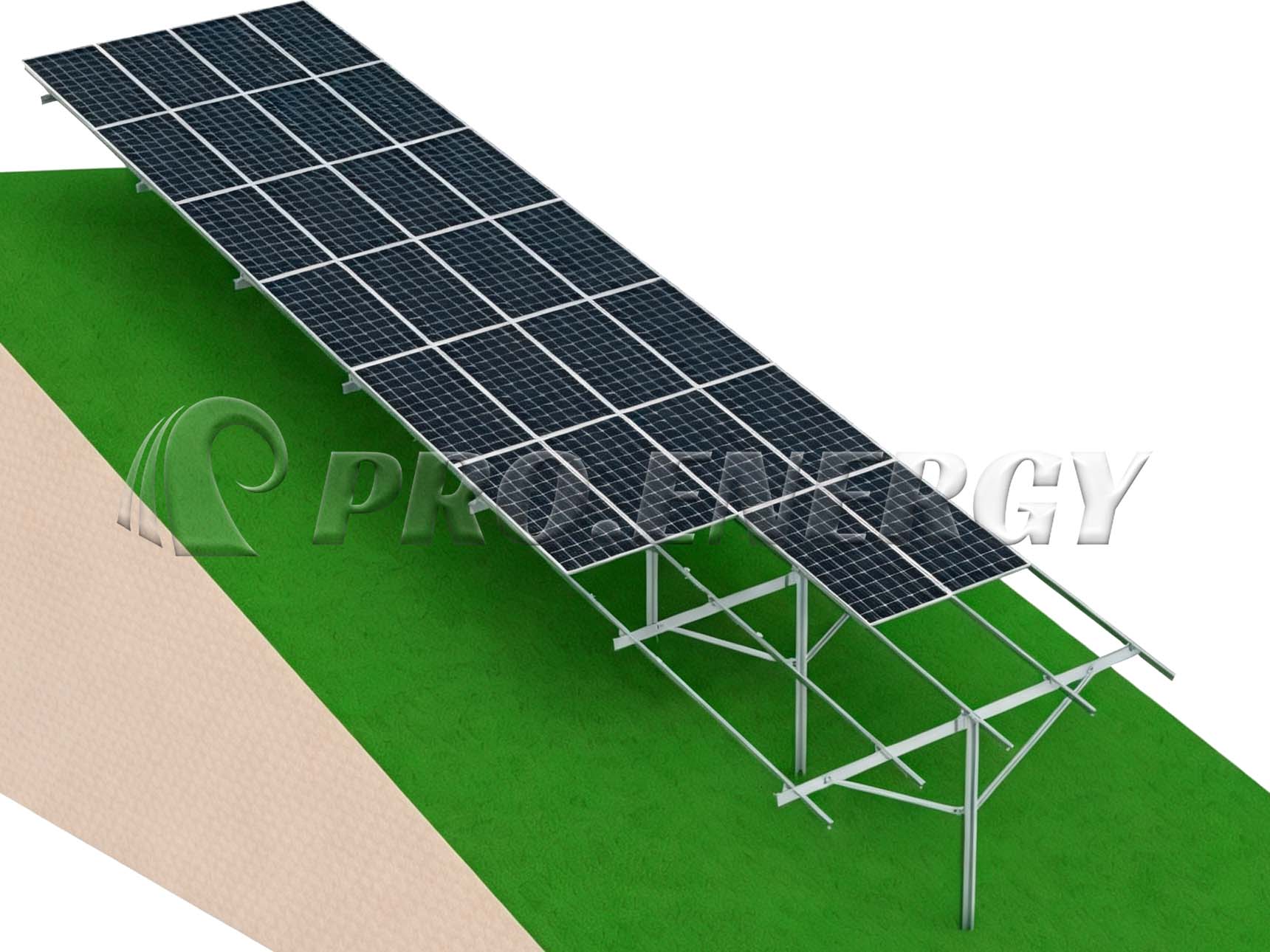
Each unit of a single-column support system requires only a single row of foundations, with approximately half the number of piles required for a double-column system. This results in less pile construction, a shorter installation period, flexible pile placement, strong adaptability to east-west slopes, and higher ground clearance, facilitating agricultural machinery access in agro-photovoltaic hybrid scenarios. Taking PROFENCE.ENERGY's single-column support system as an example, it uses carbon steel with hot-dip galvanizing or zinc-aluminum-magnesium coating, has an adjustable tilt angle from 0° to 60°, and a maximum snow load of 4.0 KN/m², making it suitable for mountainous projects with significant terrain undulations. However, the steel consumption of the upper part of a single-column system is generally higher than that of a double-column system, and the single-point load-bearing capacity places higher demands on geological conditions. Double-column support: Distributes load evenly, suitable for flat sites
Double-column support: distributes stress evenly, suitable for flat sites
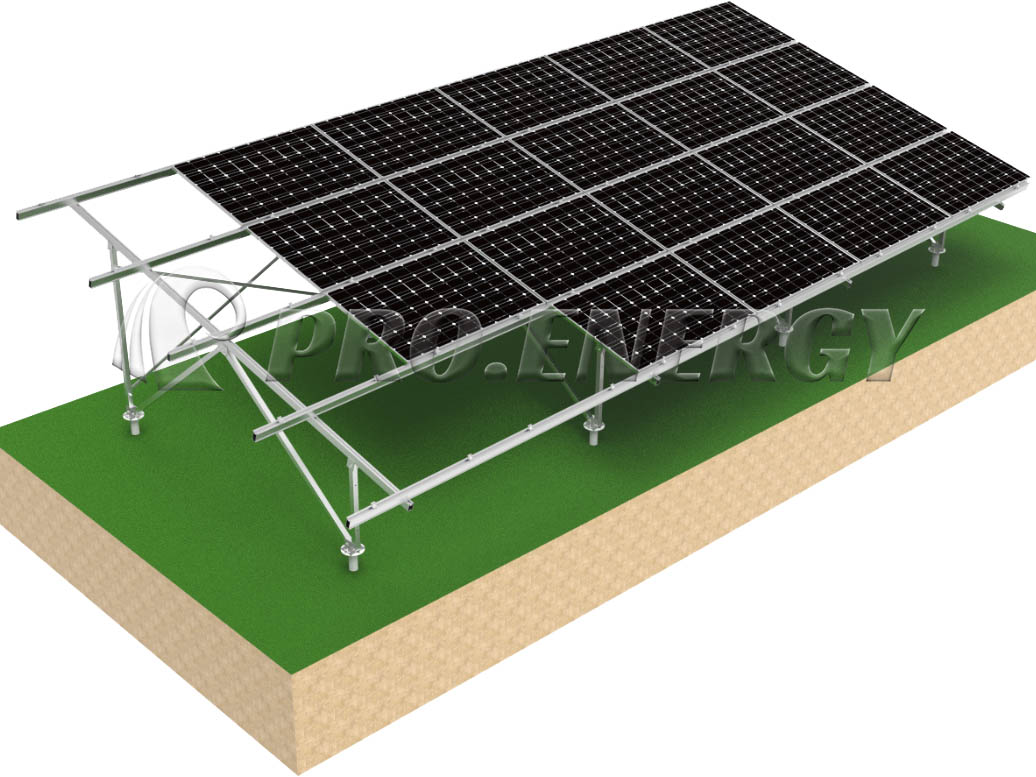
Double-column support systems employ a front-to-back double-row column design, distributing the load across multiple support points and offering higher structural redundancy. C-shaped steel double-column support systems are a typical option, using S350GD carbon steel and hot-dip galvanizing. All guide rails, beams, and columns are C-shaped steel, connected via specialized accessories. Pre-assembly of beams and columns before shipment significantly reduces on-site labor costs. It distributes load evenly on flat sites, and the amount of steel used in the upper structure is typically lower than with single-column systems. However, double-column systems require a higher degree of terrain flatness, and the increased number of piles leads to a longer construction period.
Selection Recommendations
Single-column systems are more suitable for projects in mountainous or sloping terrain with significant undulations, as well as for agro-solar hybrid scenarios that require agricultural planting. C-shaped steel double-column systems are more suitable for large-scale ground-mounted power stations on flat terrain. Selection should comprehensively consider multiple factors, including site topography, geological conditions, project timeline, and budget.
- How do coastal PV carports withstand salt spray and strong winds?
- How can the drainage design of PV carports balance waterproofing with structural safety?
- What are the advantages and key design considerations of waterproof solar carports?
- Metal Roofs vs. Tile Roofs: Which is Better for Solar PV Installation?
- Single-column or double-column ground-mounted support systems: Which is more suitable for your photovoltaic power station?
- 2026 PV EXPO Autumn Exhibition Visitor Guide and Agricultural Photovoltaic Complementary Technology Trends