Metal Roofs vs. Tile Roofs: Which is Better for Solar PV Installation?

Author
PROFENCE.ENERGY was established in 2014 with a focus on the design and manufacturing of solar mounting systems and related products
When installing a solar PV system on a roof, the roof material directly determines the choice of support system and construction method. Metal roofs and tile roofs differ significantly in structural form, waterproofing, and installation difficulty.
Tile Roofs: Hook Systems are the Mainstream Solution
Installation on tile roofs (including cement tiles, clay tiles, asphalt shingles, etc.) typically requires removing the tiles, fixing hooks to the roof purlins or concrete structure, then replacing the tiles and sealing them. This requires high precision. Currently, the most mature solution is the aluminum alloy tile roof hook system.
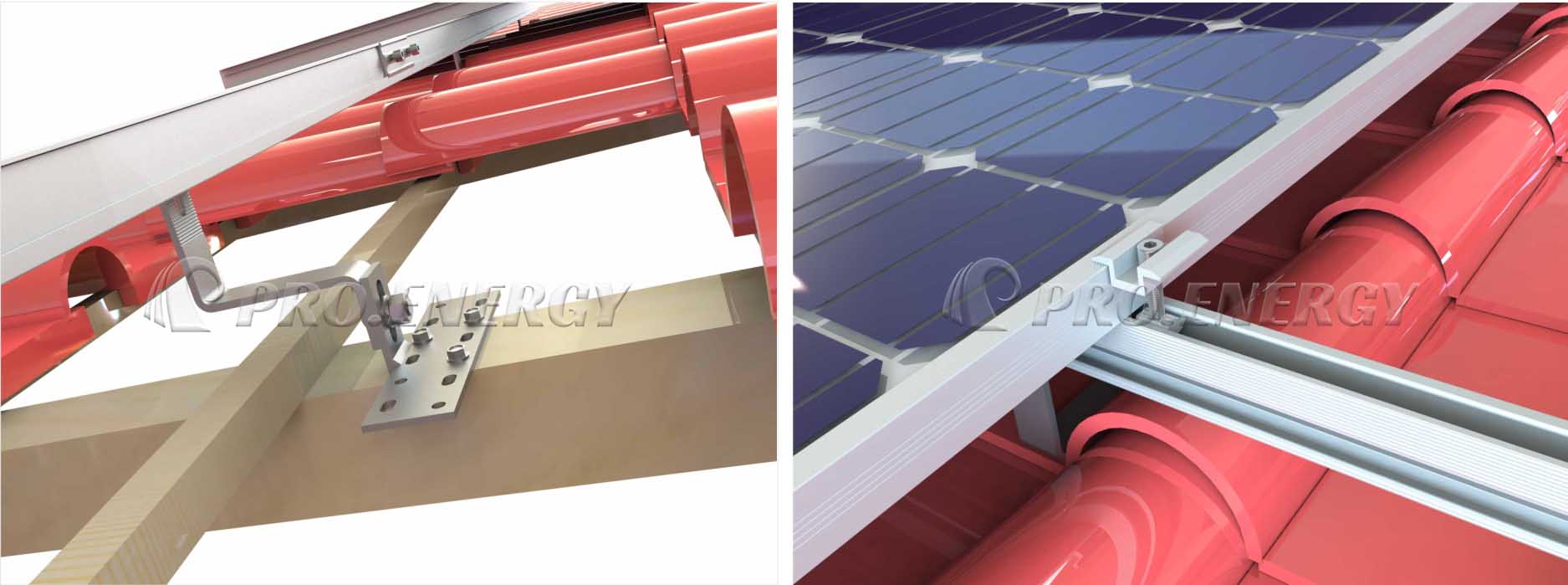
This system has fewer components, offers various hook options to adapt to different purlin structures, and, with universal center and edge blocks, can accommodate most solar modules. Its rail design is also compatible, and some solutions can also be used on metal roofs. Installation does not damage the waterproofing layer, and residential projects typically offer a 10-year warranty.
Metal Roofing: Non-penetrating Clamps are the Mainstream
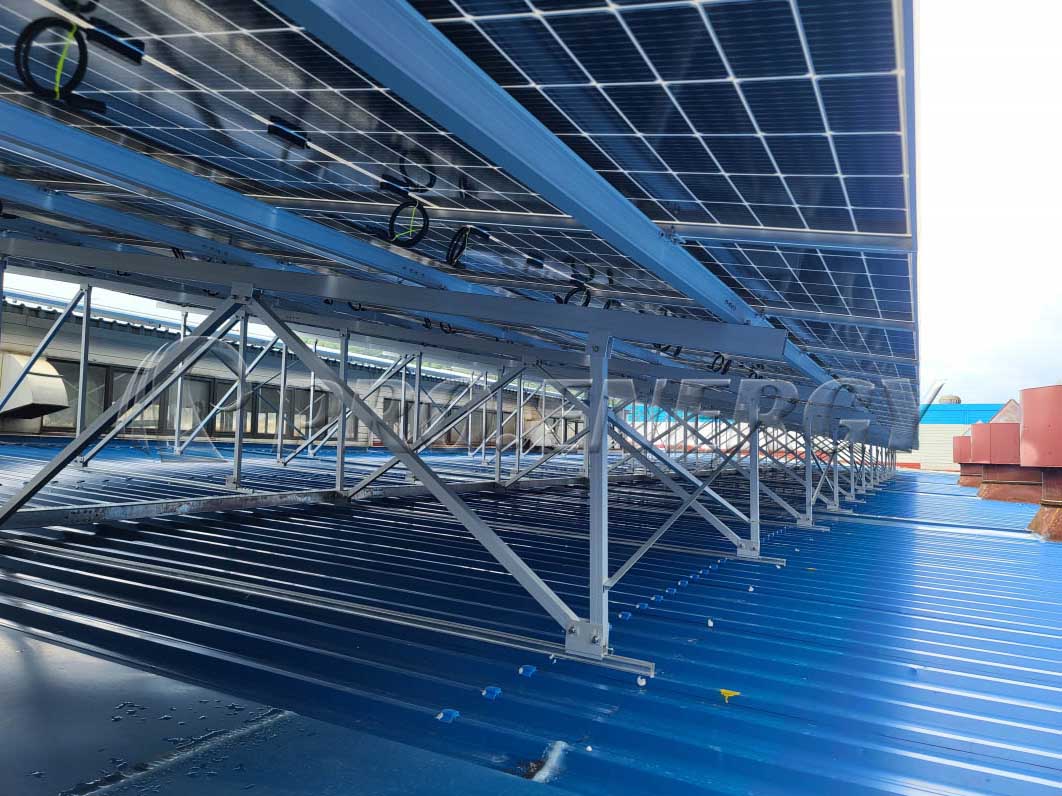
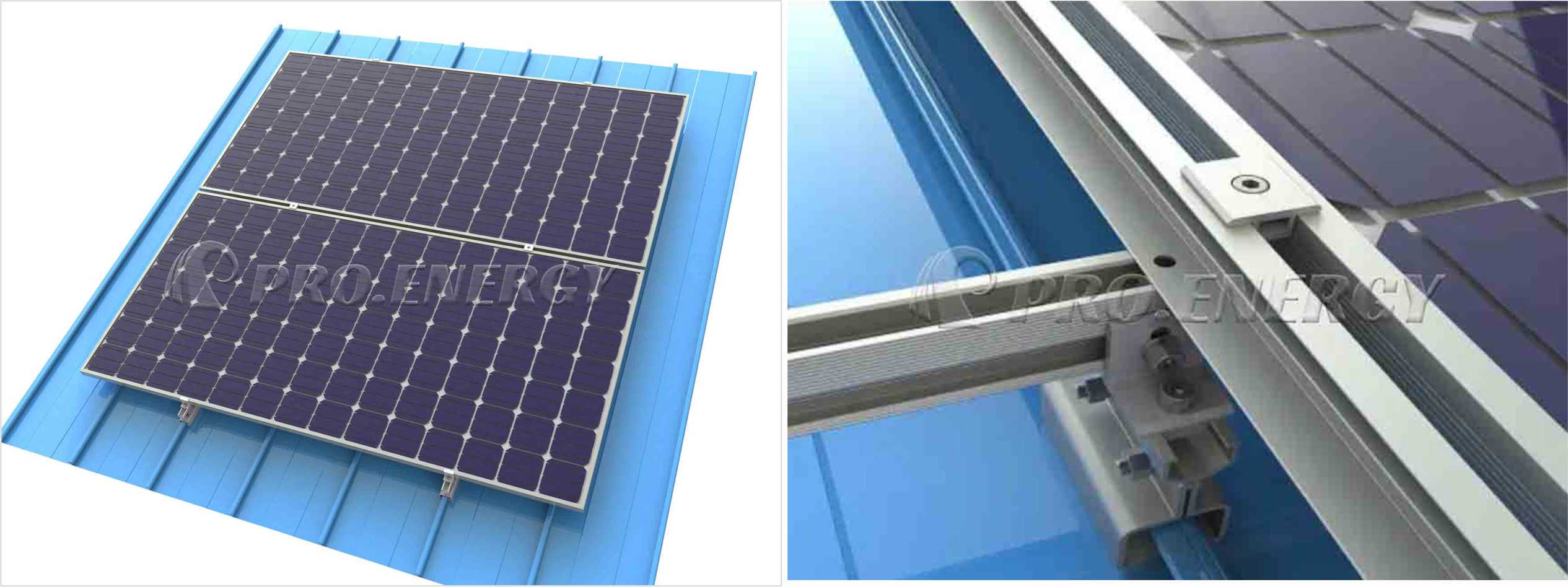
Metal roofing (such as standing seam, trapezoidal corrugated panels, etc.) typically uses non-penetrating clamps to fix the guide rails. This eliminates the need for drilling, does not damage the waterproofing layer, and offers high installation efficiency. Solutions are broadly divided into two categories:
The guide rail system is optimized for metal sheet roofs. All clamps are customized to the roof cross-section, ensuring slip-free installation. It saves materials, offers high cost-effectiveness, and its lightweight design reduces logistics and warehousing costs, making it suitable for industrial and commercial metal roofing projects.
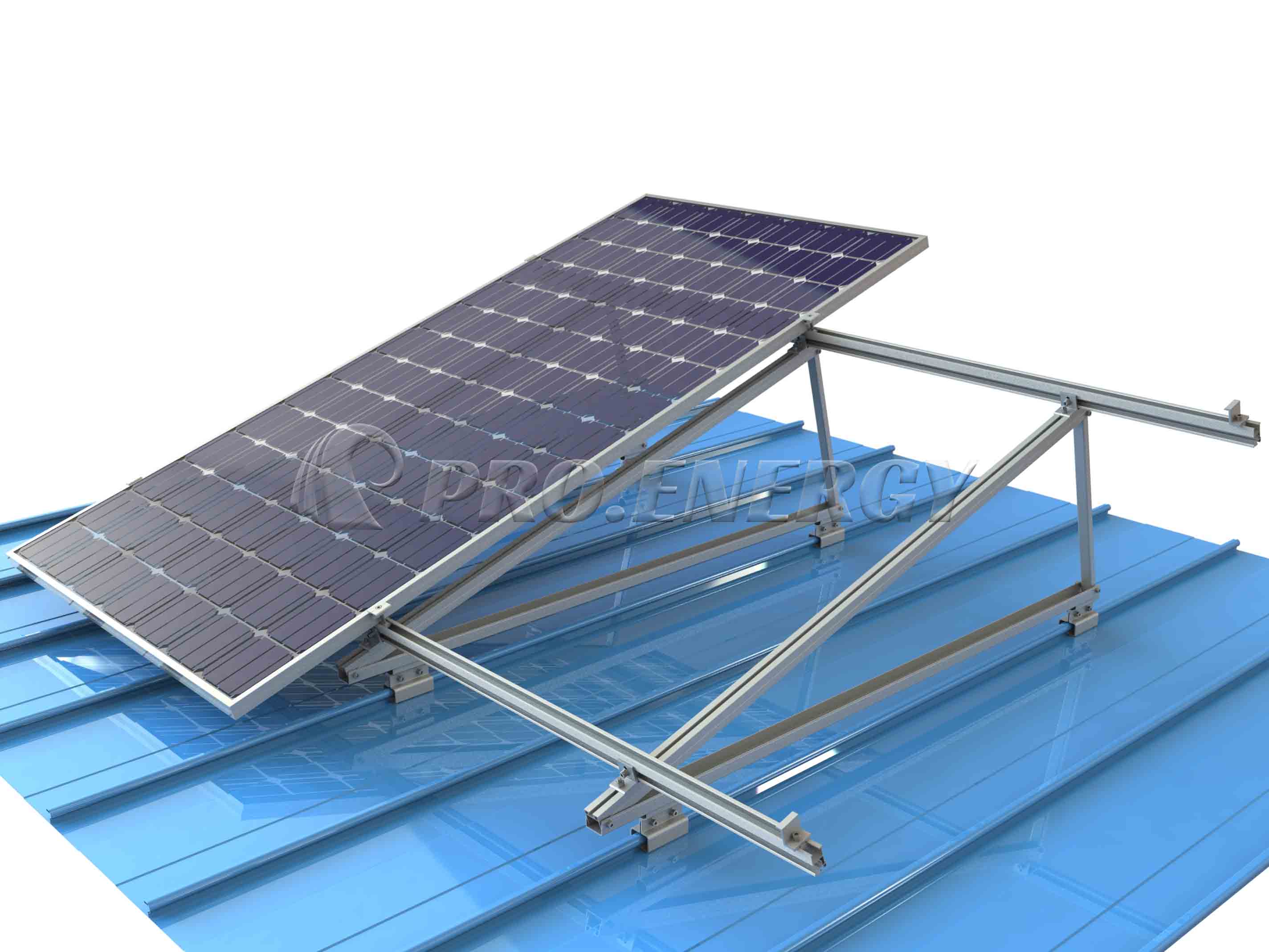
The aluminum alloy triangular bracket system is suitable for both metal sheet roofs and flat concrete roofs, with an adjustable tilt angle between 0° and 30°. Made of AL6005-T5 aluminum alloy, it requires no expansion bolts for on-site fixing and is quick to install.
Selection Recommendations
For tile roofs, a hook system is recommended, with careful waterproofing during construction. For metal roofs, if cost-effectiveness is a priority, a guide rail system is preferable. For tilt angle adjustment or flat roof applications, the triangular bracket system offers greater flexibility. Before installation, always confirm the roof structure's load-bearing capacity. With the right solution, the system can operate safely for over 20 years.
- How can the drainage design of PV carports balance waterproofing with structural safety?
- What are the advantages and key design considerations of waterproof solar carports?
- Metal Roofs vs. Tile Roofs: Which is Better for Solar PV Installation?
- Single-column or double-column ground-mounted support systems: Which is more suitable for your photovoltaic power station?
- 2026 PV EXPO Autumn Exhibition Visitor Guide and Agricultural Photovoltaic Complementary Technology Trends
- How do you select the appropriate ground clearance for an agrivoltaic system?