How can the drainage design of PV carports balance waterproofing with structural safety?

Author
PROFENCE.ENERGY was established in 2014 with a focus on the design and manufacturing of solar mounting systems and related products
From standard PV carports to waterproof versions and fully integrated BIPV (Building-Integrated Photovoltaics) carports, drainage design directly determines both structural longevity and architectural aesthetics. Taking "water-guiding rail waterproofing" and "folded-plate roof waterproofing" as examples, the underlying engineering logic for each differs in focus.
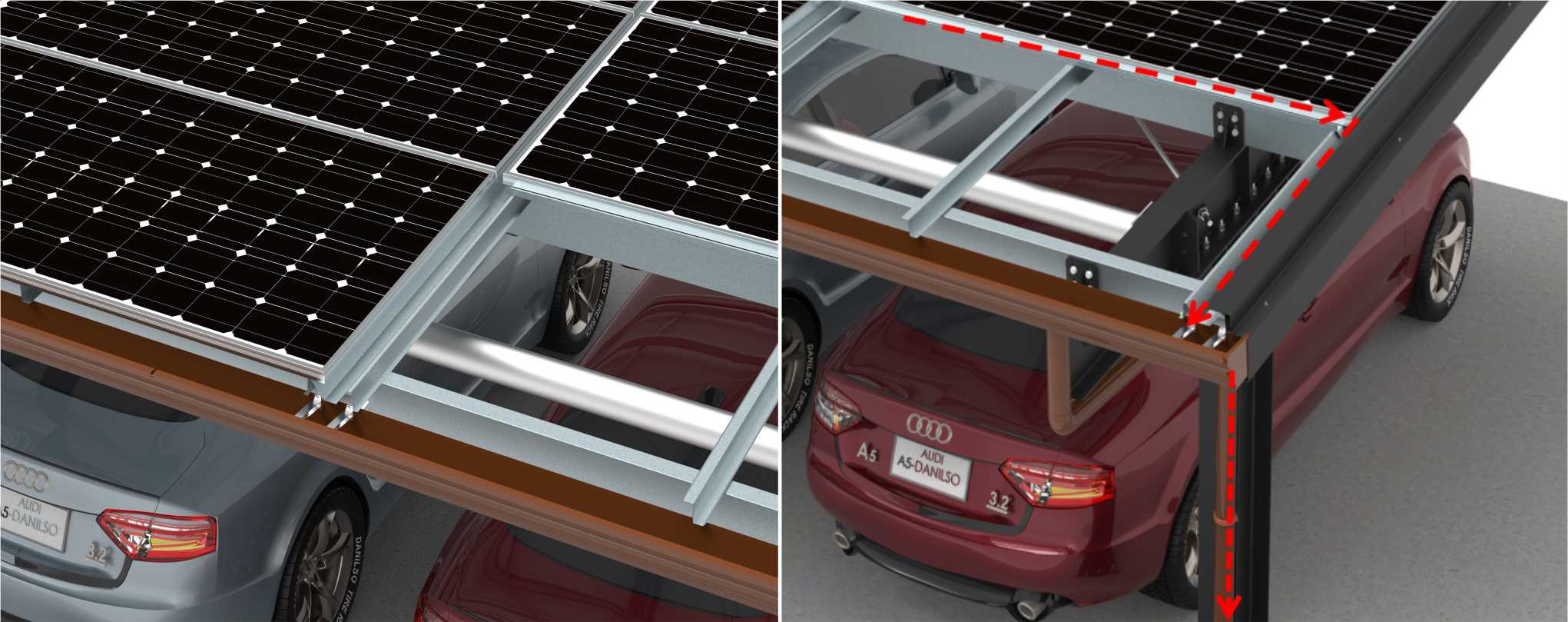
"Water-guiding rail waterproofing" (concealed gutters + drainage pipes).
Based on proven designs, this method uses longitudinal M-shaped channels, transverse guide rails, waterproof covers, and diverter sheets to contain rainwater beneath the modules, subsequently channeling it out through gutters inside the support columns. This approach completely eliminates capillary backflow along module edges and offers a minimalist appearance, perfectly aligning with BIPV requirements for architectural integration. However, in extremely cold regions, the design must account for the risk of blockages caused by meltwater refreezing in the concealed gutters.
"Folded-plate roof waterproofing."
PV panels are mounted directly onto Al-Zn coated folded steel plates, utilizing the plates' inherent slope and water resistance to create a dual line of defense. This structure offers superior load-bearing capacity, making it suitable for large-span applications or regions with heavy snowfall.
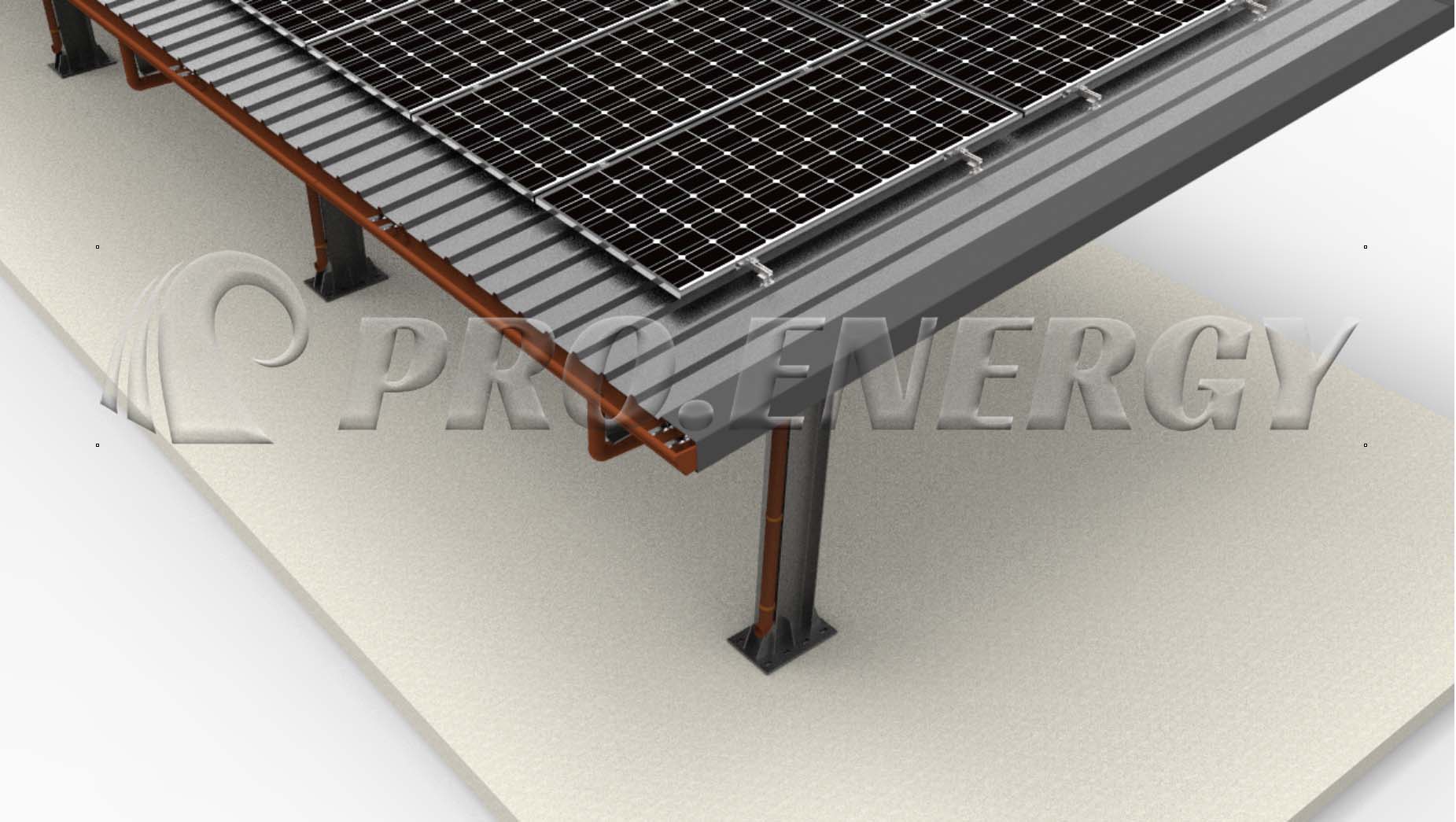
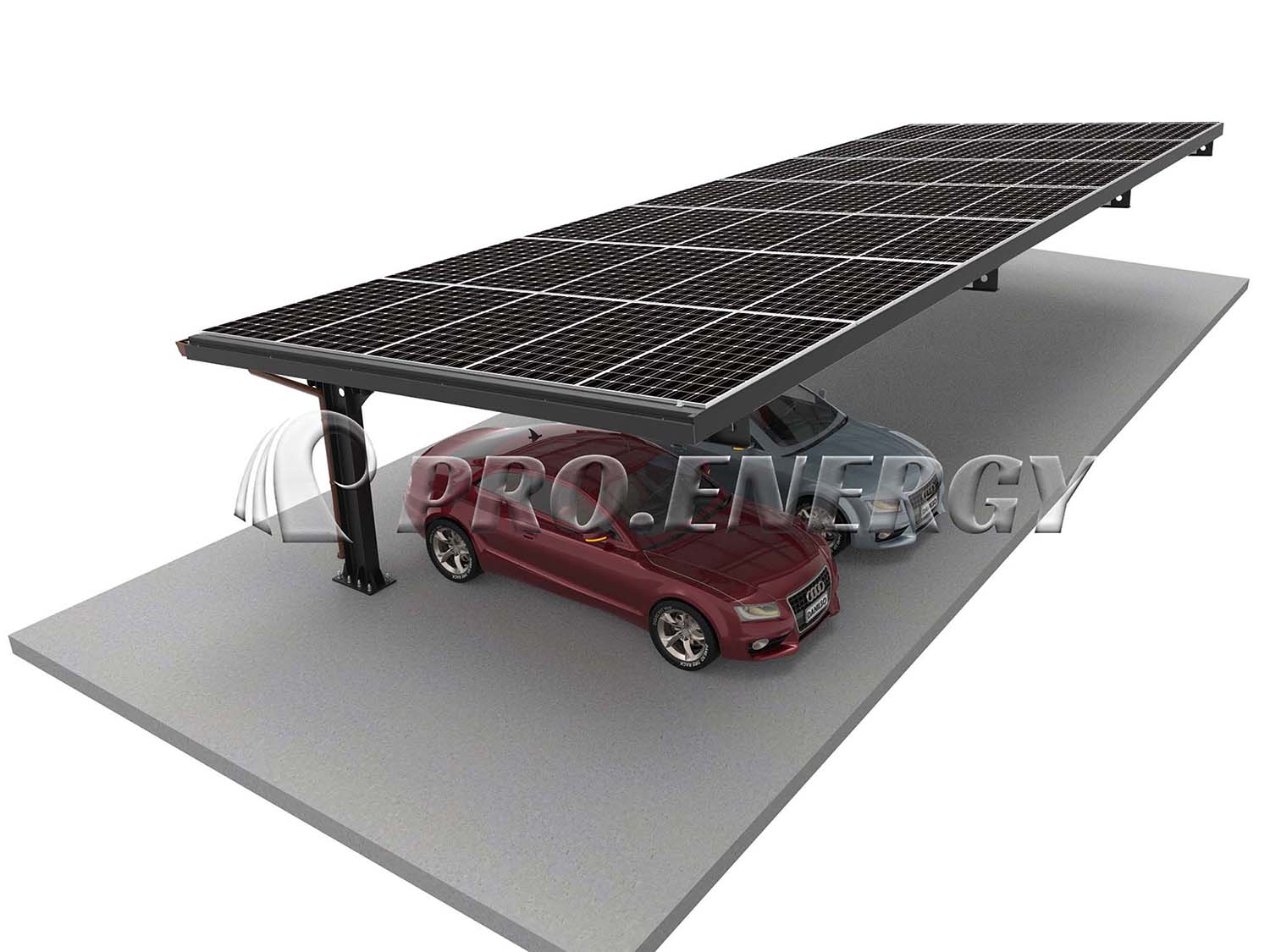
Regarding market offerings, the "I-type" waterproof carport mounting system features a typical integrated concealed gutter design. Its combination of 6005-T6 aluminum alloy and SUS304 stainless steel eliminates the need for an additional waterproofing layer; tool-free snap-fits and pre-assembled components reduce on-site labor by 40%, precisely meeting the European demand for rapid installation and aesthetic appeal in commercial and residential EV charging stations.
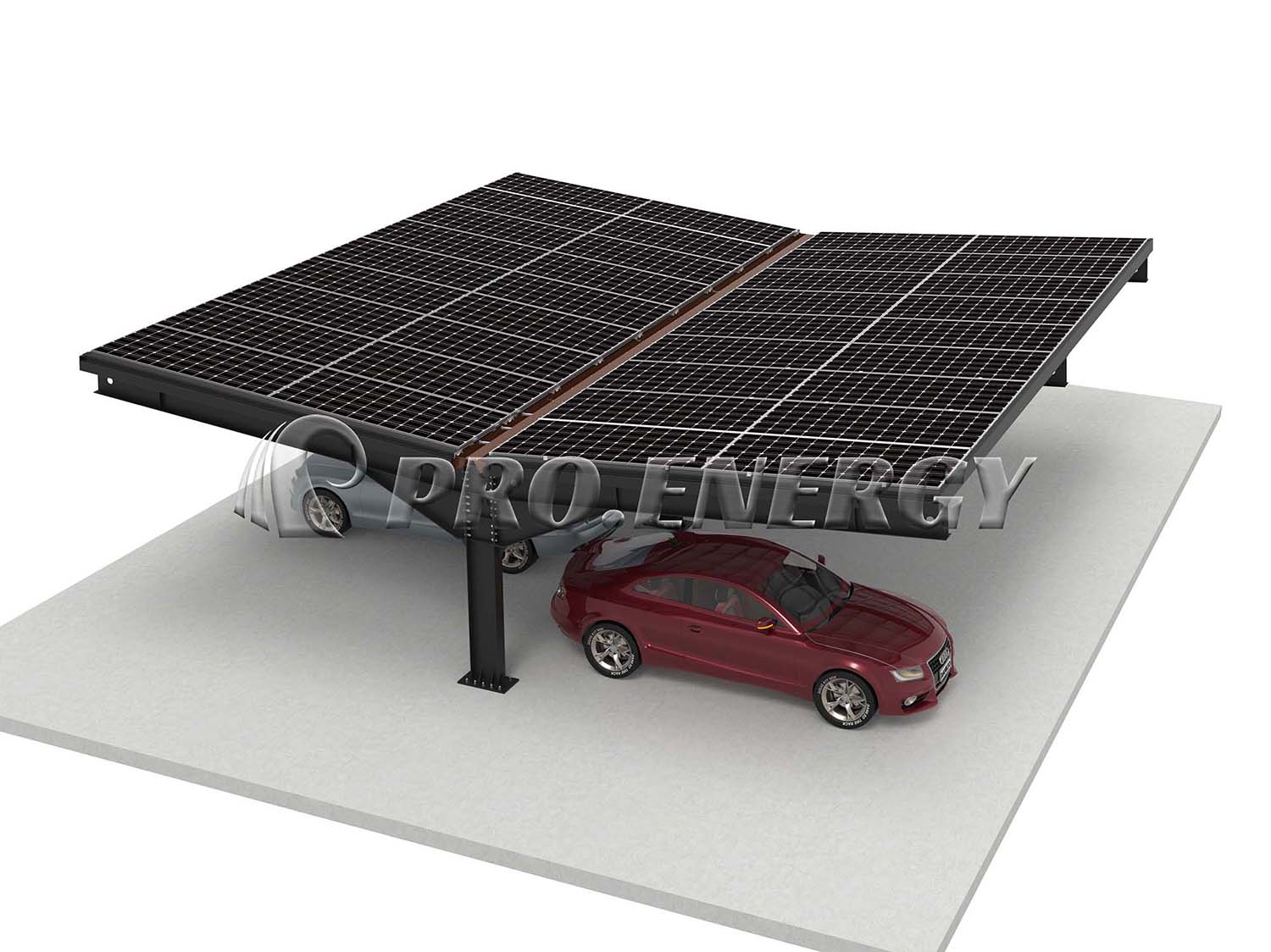
In contrast, the "T-type" carbon steel mounting system is engineered for the heavy snow loads of Northern Europe and the strong winds of coastal areas, utilizing hot-dip galvanized carbon steel to provide exceptional structural rigidity and load-bearing capacity. For extremely cold regions, while the T-type design prioritizes load-bearing strength, its drainage path must be specifically engineered to prevent freezing and blockages.
In summary, concealed gutter designs are ideal for BIPV or commercial projects that prioritize refined drainage and aesthetics, whereas folded-plate roof designs are better suited for large-scale industrial projects requiring exceptional structural load-bearing capacity. When selecting a model, it is necessary to weigh factors such as local precipitation, wind and snow loads, and labor costs. Discussing waterproofing without regard for actual climatic conditions often leads to high maintenance costs down the line.
- How can the drainage design of PV carports balance waterproofing with structural safety?
- What are the advantages and key design considerations of waterproof solar carports?
- Metal Roofs vs. Tile Roofs: Which is Better for Solar PV Installation?
- Single-column or double-column ground-mounted support systems: Which is more suitable for your photovoltaic power station?
- 2026 PV EXPO Autumn Exhibition Visitor Guide and Agricultural Photovoltaic Complementary Technology Trends
- How do you select the appropriate ground clearance for an agrivoltaic system?