
Rooftop Walkway Systems: Why are they crucial for PV maintenance safety?


Author
PROFENCE.ENERGY was established in 2014 with a focus on the design and manufacturing of solar mounting systems and related products
Rooftop PV systems require regular inspection and maintenance during operation. Maintenance personnel face the risk of falls when working on sloping metal roofs. Walking directly on the roof or modules can also damage roof panels and cause microcracks in the modules, affecting power generation efficiency. As the scale of rooftop PV projects continues to expand, walkway systems have become an important facility for ensuring maintenance safety.
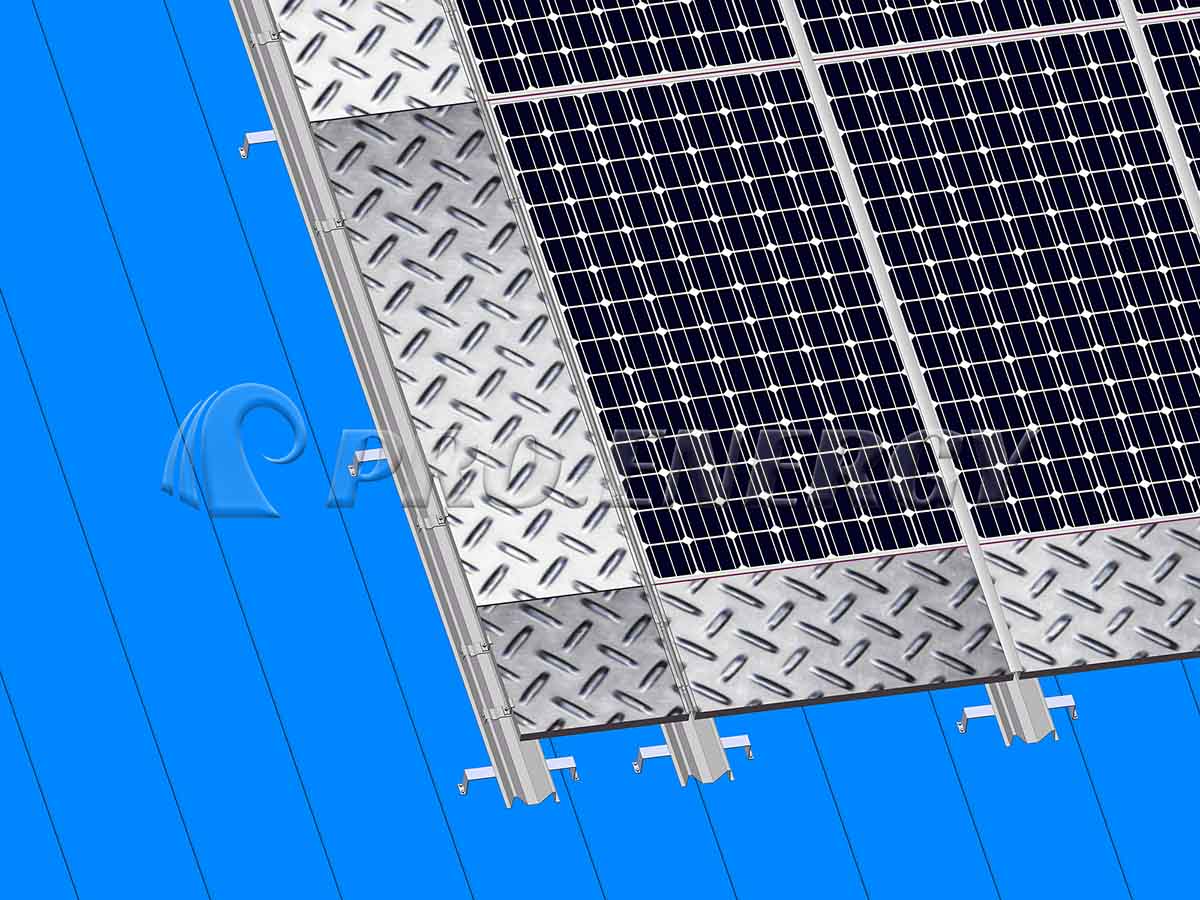
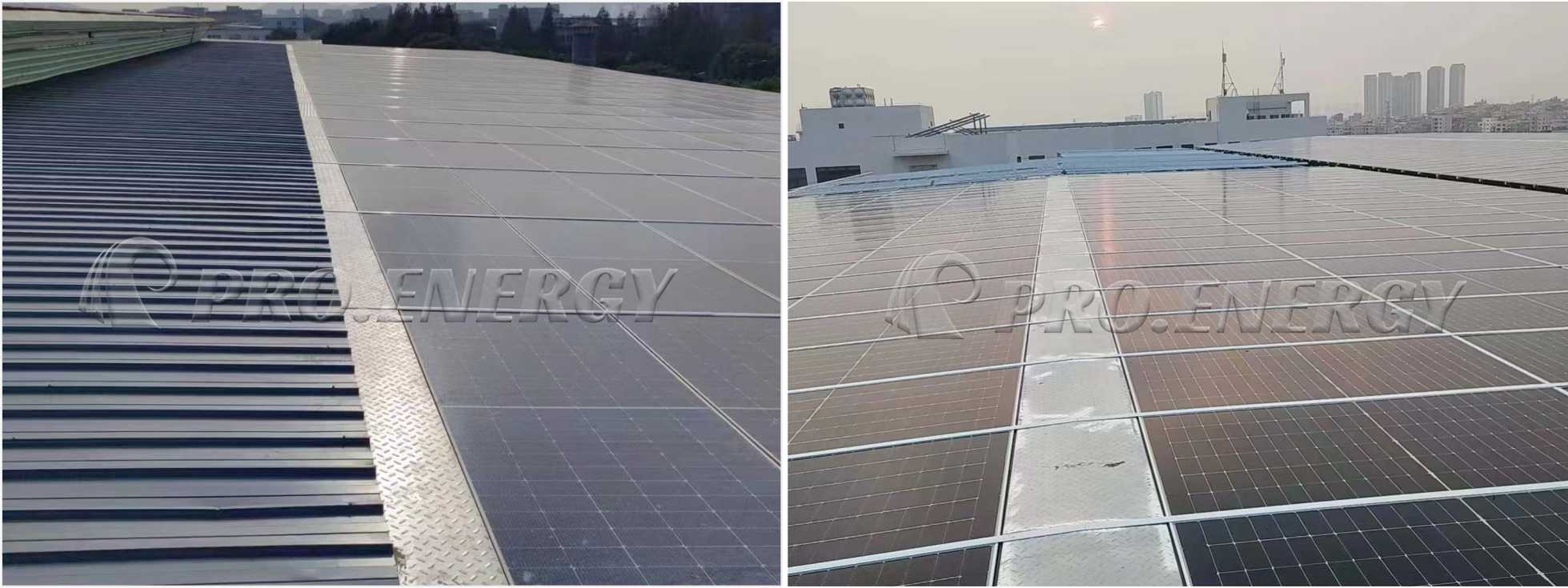
First, they improve maintenance safety. The non-slip surface design of the walkway system provides stable grip even in wet conditions, while also providing clearly defined passageways for technicians, effectively reducing the risks of working at heights.
Second, they protect PV modules and the roof. Directly stepping on the modules during construction and maintenance can cause microcracks and wear. The walkway system eliminates this hazard by guiding personnel along designated routes, protecting the modules from damage.
Third, some walkway systems also have cable management functions, protecting PV cables from UV corrosion, extending their lifespan, and further ensuring system reliability.
Currently, the most common roof walkway solutions on the market primarily utilize two materials:
Anti-slip ZAM metal roof walkways use zinc-aluminum-magnesium (Zn-Al-Mg) coated carbon steel. The ZAM coating offers superior corrosion resistance compared to traditional hot-dip galvanizing, features self-healing edges, and is relatively lightweight, making it suitable for applications with high corrosion resistance requirements.
High-load-bearing hot-dip galvanized steel roof walkways employ a welded steel frame and grating structure, boasting outstanding load-bearing capacity, capable of withstanding distributed loads up to 250 kg. Installation typically employs non-penetrating roof clamps, eliminating the need for drilling and maintaining the roof's waterproof integrity.
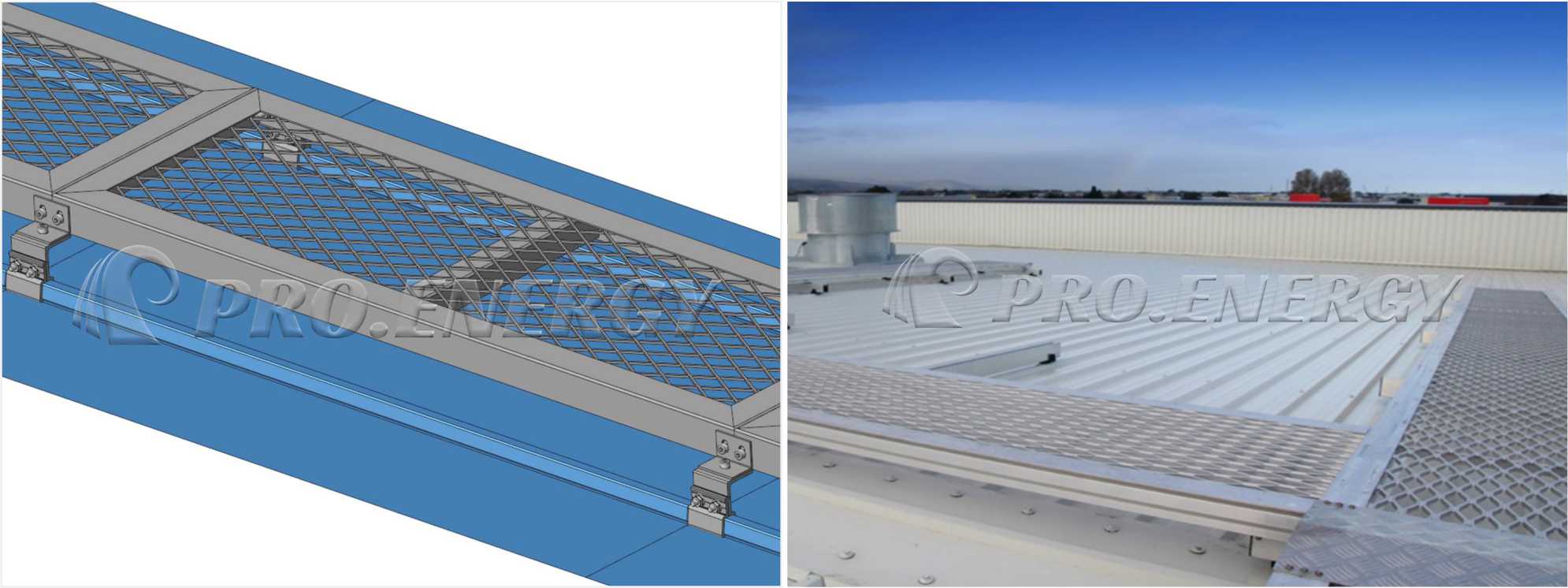
In actual projects, both types of walkway systems utilize pre-assembled modular designs, simplifying installation. For projects requiring a balance between durability and cost-effectiveness, hot-dip galvanized steel walkways are a common choice; for highly corrosive environments or projects with weight restrictions, ZAM material offers greater advantages. Regardless of the chosen solution, roof walkway systems are crucial infrastructure for ensuring the long-term safe operation of photovoltaic power plants.
- How can the drainage design of PV carports balance waterproofing with structural safety?
- What are the advantages and key design considerations of waterproof solar carports?
- Metal Roofs vs. Tile Roofs: Which is Better for Solar PV Installation?
- Single-column or double-column ground-mounted support systems: Which is more suitable for your photovoltaic power station?
- 2026 PV EXPO Autumn Exhibition Visitor Guide and Agricultural Photovoltaic Complementary Technology Trends
- How do you select the appropriate ground clearance for an agrivoltaic system?