
How does the drainage system of a photovoltaic carport work?

Author
PROFENCE.ENERGY was established in 2014 with a focus on the design and manufacturing of solar mounting systems and related products
Photovoltaic carports combine power generation and parking functions, and their application in industrial and commercial parks and public parking lots has become increasingly widespread in recent years. Unlike ordinary photovoltaic brackets, carports not only support the modules but also need to provide shade and rain protection for the vehicles below. Therefore, the drainage system is a crucial aspect that cannot be ignored in the design of photovoltaic carports.
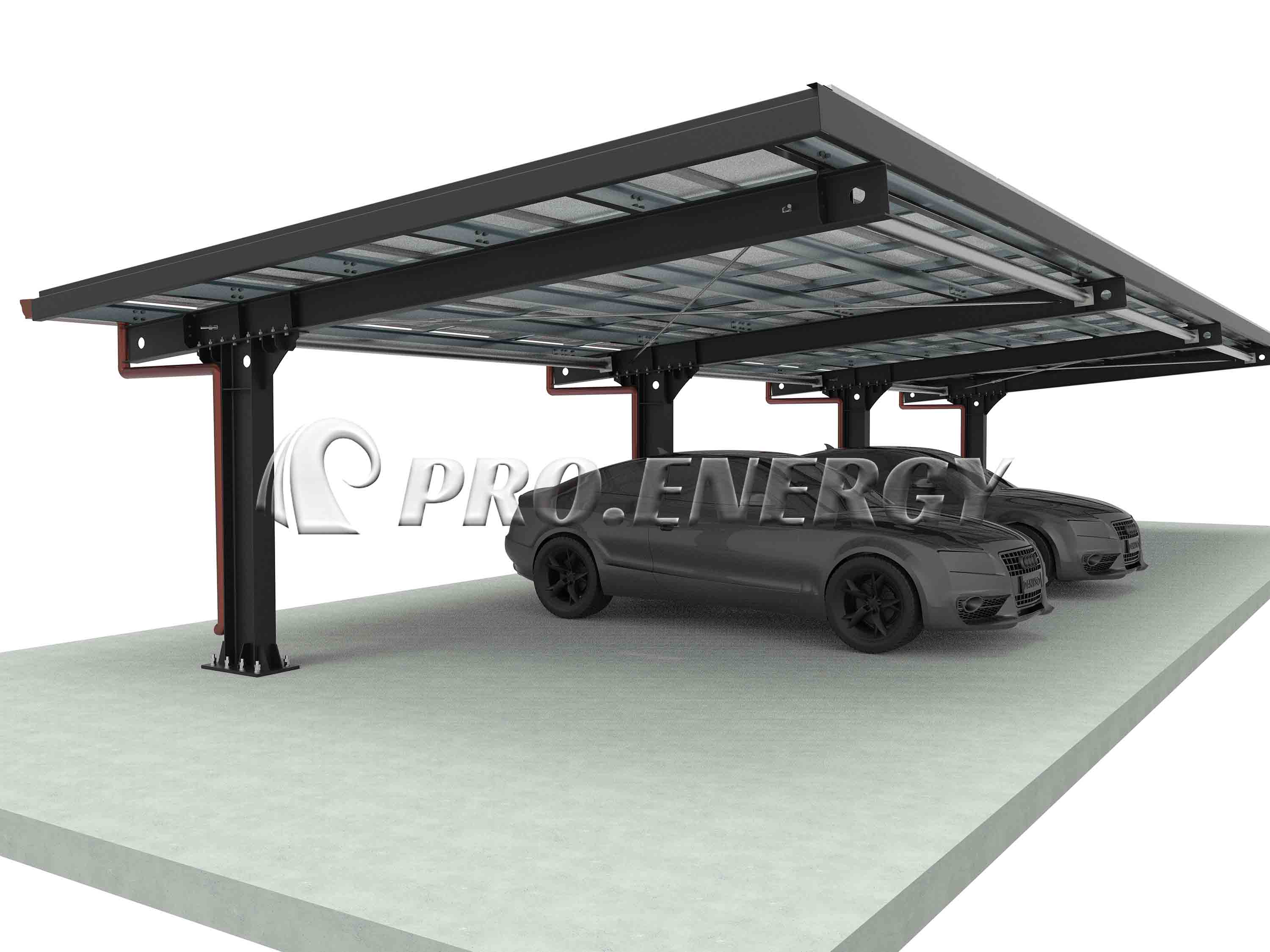
Currently, a relatively mature solution is to use a combined structure of "invisible gutters + water pipes." Its core lies in integrating the drainage components with the main body of the carport. Taking the M-shaped main water channel as an example, it is set along the direction of the module arrangement, working in conjunction with the secondary water channel and waterproof cover to form a continuous water flow guidance path. Rainwater is collected in the water channel to the gutter and then discharged in an orderly manner through connected water pipes. This fully enclosed, integrated drainage design ensures that the interior of the carport remains dry even under heavy rain conditions.
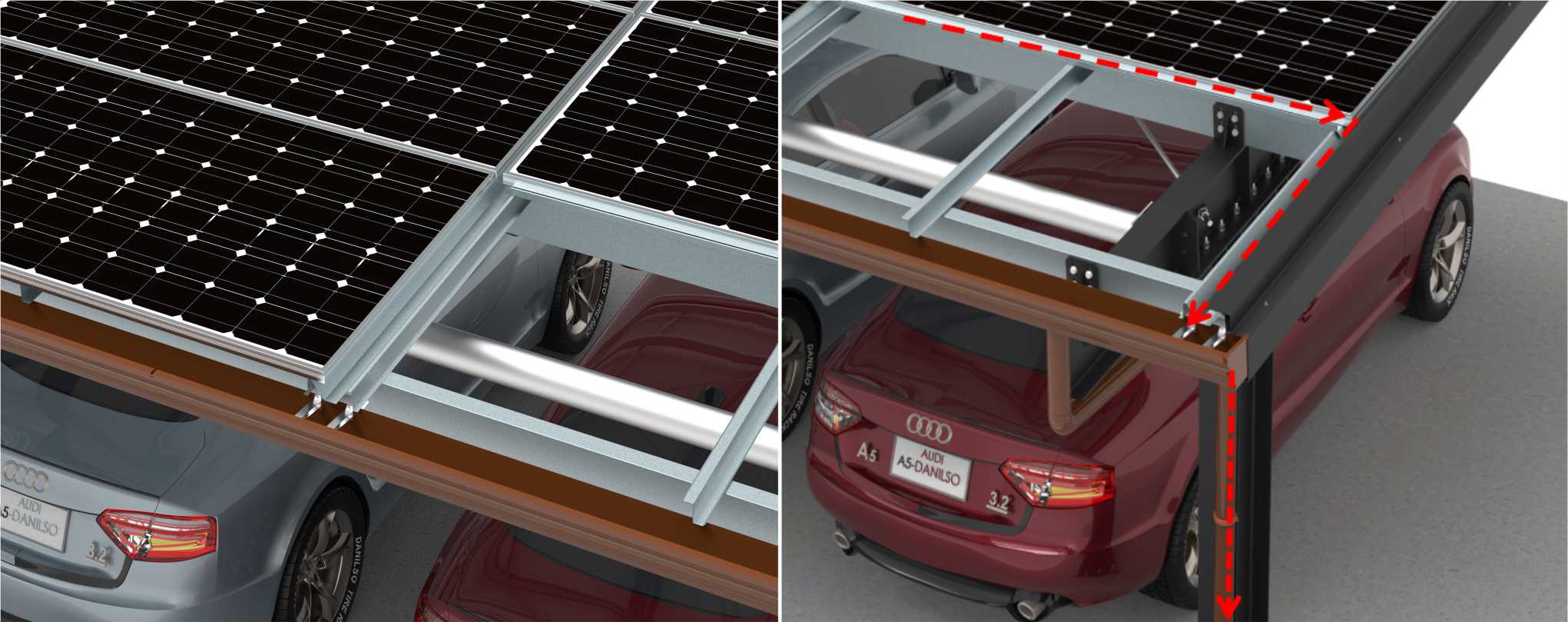
In terms of arrangement, longitudinally arranged modules are usually equipped with longitudinal water channels, while transversely arranged modules are equipped with transverse water channels to adapt to diverse carport layout needs. In terms of materials, the drainage channels and gutters are typically made of zinc-aluminum-magnesium coated steel, which possesses excellent corrosion resistance; the edging of the gutters is made of aluminum alloy, providing both corrosion resistance and anti-aging properties.
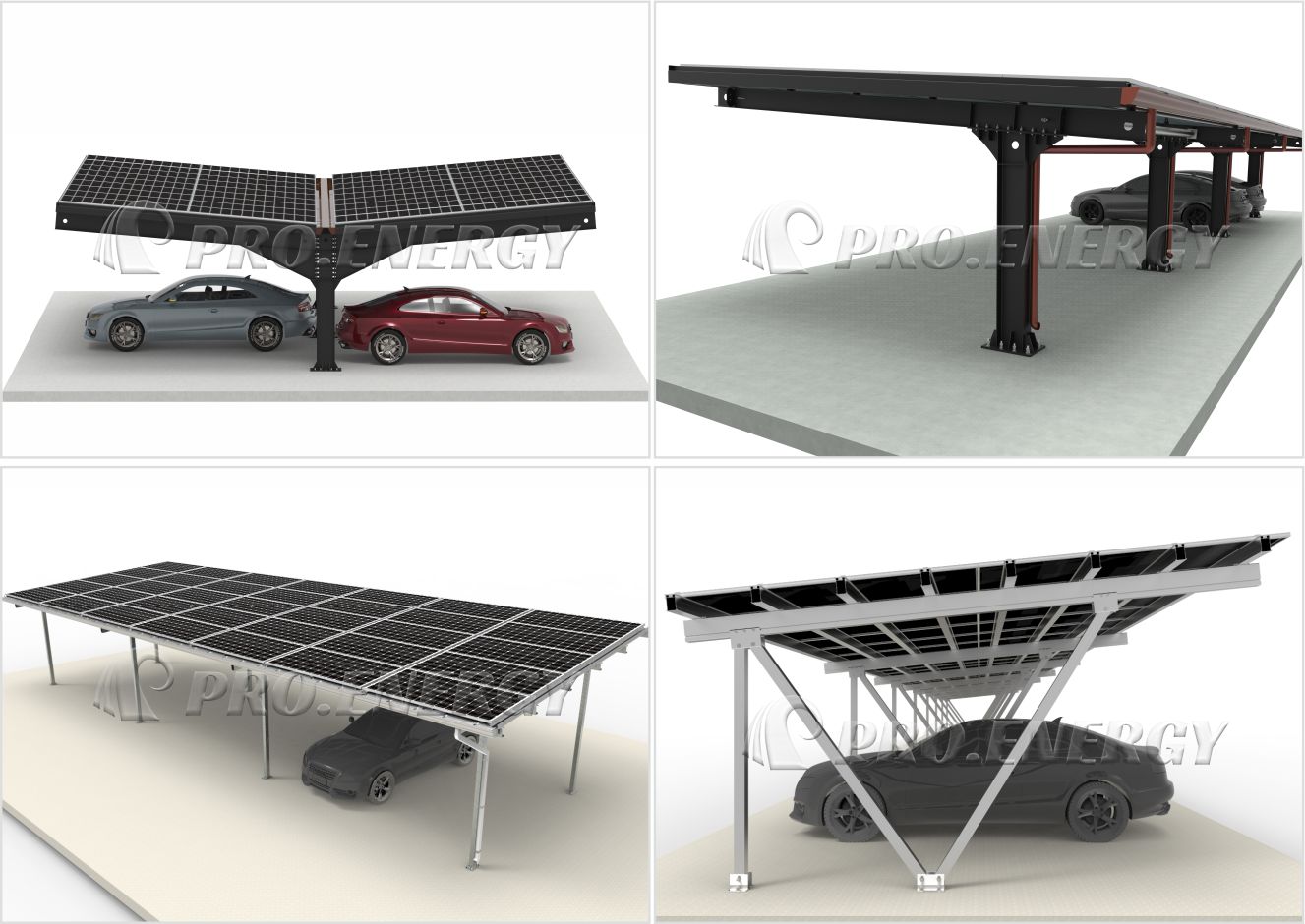
Currently, common carport structures on the market include various forms such as Type I, Type T, and Type IV, but the design logic of the drainage system is consistent—through scientific water drainage path planning and reliable material selection, effective waterproofing is achieved while ensuring power generation functionality. Although the drainage system does not directly participate in power generation, it is a crucial foundation for ensuring the long-term stable operation of the photovoltaic carport.
- How can the drainage design of PV carports balance waterproofing with structural safety?
- What are the advantages and key design considerations of waterproof solar carports?
- Metal Roofs vs. Tile Roofs: Which is Better for Solar PV Installation?
- Single-column or double-column ground-mounted support systems: Which is more suitable for your photovoltaic power station?
- 2026 PV EXPO Autumn Exhibition Visitor Guide and Agricultural Photovoltaic Complementary Technology Trends
- How do you select the appropriate ground clearance for an agrivoltaic system?