
Ballast-Loaded Roof Mounts: Install Solar PV Systems Without Drilling


Author
PROFENCE.ENERGY was established in 2014 with a focus on the design and manufacturing of solar mounting systems and related products
Traditionally, installing solar PV systems on a roof often requires drilling holes in the roof surface and using expansion bolts to secure the mounts to the structural layer. While this method is robust, it also leads to problems such as damage to the waterproofing layer, increased risk of leaks, and voiding of roof warranties. For many homeowners, drilling is their biggest concern.
Ballast-loaded roof mounts offer a completely different solution: no drilling, no damage to the roof, and the solar system is securely fixed to the roof solely by its own weight and friction.
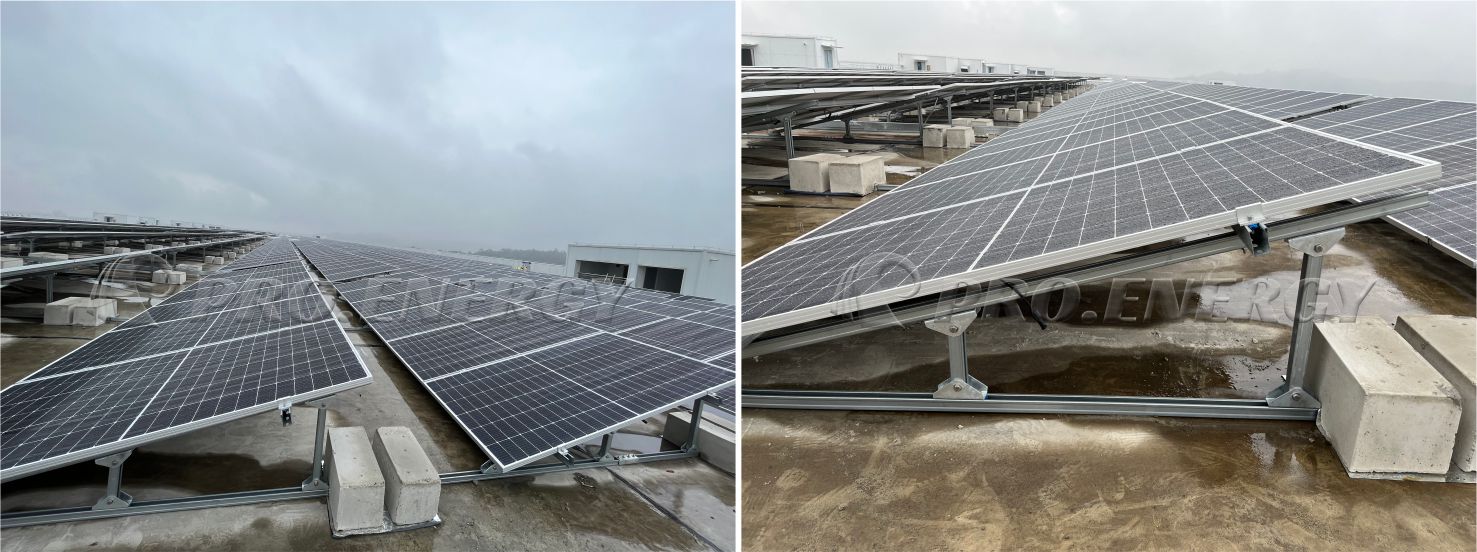
What are Ballast-Loaded Roof Mounts?
A ballast-loaded mount is a metal frame with pre-drilled spaces for placing concrete blocks, cement bricks, or specialized ballast boxes. The solar modules are installed above the frame, and the weight of the entire system is evenly distributed across the roof surface via the base. When wind loads blow upwards or laterally, the system's own weight and the friction between the base and the roof surface are sufficient to resist the wind force and maintain stability.
The required ballast weight must be calculated based on local wind speed and roof height during the design phase. Ballast-mounted roof supports are primarily suitable for flat or low-slope roofs, such as industrial plants, commercial buildings, and large public facilities.
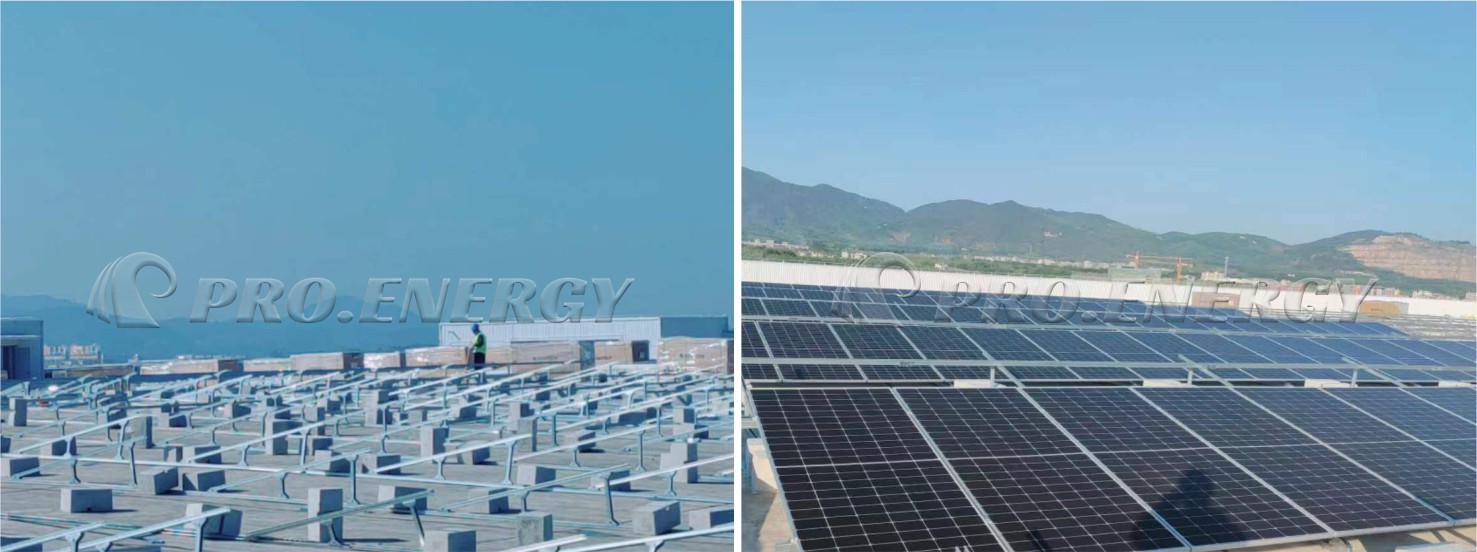
Ballast-mounted roof photovoltaic supports are a mature and reliable non-penetrating installation technology. Compared to traditional drilling methods, their core advantages lie in not damaging the waterproof layer, completely eliminating the risk of leakage, and not affecting the roof warranty. Furthermore, no anchoring is required, and modular assembly can shorten the construction period by more than 30%. The system also has good reversibility, allowing for complete dismantling and relocation, making it particularly suitable for temporary or leased roof projects. It also avoids structural damage that may be caused by drilling into aging roofs. Provided the roof's load-bearing capacity meets requirements and wind load calculations are accurate, it can operate safely for more than 25 years.
- How can the drainage design of PV carports balance waterproofing with structural safety?
- What are the advantages and key design considerations of waterproof solar carports?
- Metal Roofs vs. Tile Roofs: Which is Better for Solar PV Installation?
- Single-column or double-column ground-mounted support systems: Which is more suitable for your photovoltaic power station?
- 2026 PV EXPO Autumn Exhibition Visitor Guide and Agricultural Photovoltaic Complementary Technology Trends
- How do you select the appropriate ground clearance for an agrivoltaic system?